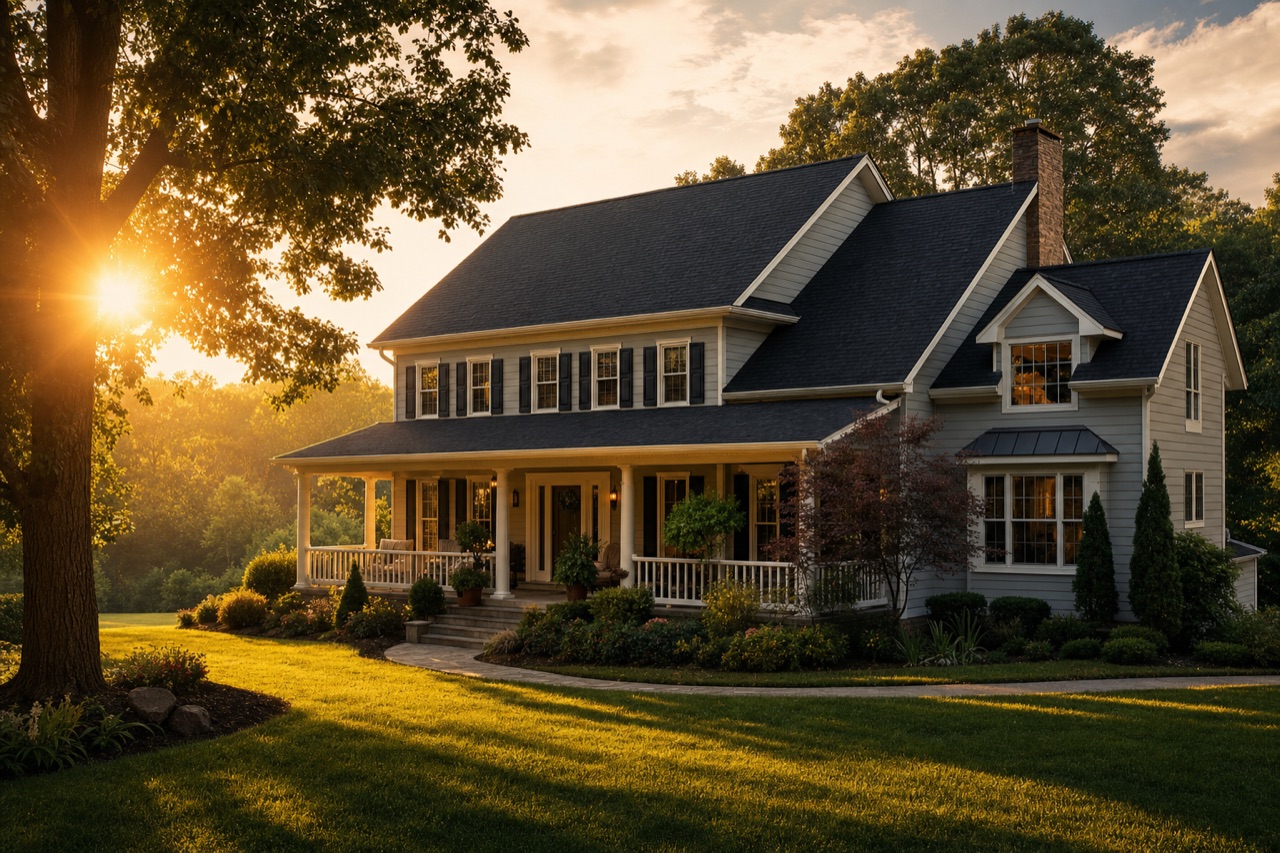
A new roof is one of the largest single repairs a homeowner ever pays for, and the price range is wide enough to make anyone nervous. The honest answer to “what will it cost?” is it depends — but it depends on a short list of variables you can actually understand. Once you do, you can read a quote like a pro and spot the difference between a fair bid and a fantasy.
The short version
For an average single-family home in 2026, a full asphalt-shingle replacement typically lands between $9,000 and $18,000, with the national average hovering around $9,500–$11,000 for a modest roof. Installed costs run roughly $4 to $11 per square foot all-in. Premium materials — standing-seam metal, clay tile, natural slate — can push a large or complex roof well past $40,000.
That’s a huge spread, so let’s break down where your number actually falls.
First, learn the unit: the “square”
Roofers don’t price by the shingle or the bundle — they price by the square, which is a 10 ft × 10 ft area, or 100 square feet of roof surface. A typical home has somewhere between 15 and 30 squares.
Two things inflate the square count beyond your home’s footprint:
- Pitch (steepness). A steep roof has more surface area than the floor beneath it, and it’s slower and riskier to walk, so crews charge a steep-slope premium.
- Waste factor. Hips, valleys, dormers, and cut-up rooflines generate offcuts. Roofers add a 10–15% waste factor (more on complex roofs), and you pay for the material that ends up in the dumpster.
So a 2,000 sq ft single-story home might have ~2,400 sq ft of roof — about 24 squares before waste.
2026 cost by material (installed, per square)
These are installed ranges — material and labor — for 2026. Regional labor rates swing them ±20% or more.
- 3-tab asphalt shingles: ~$350–$500 per square. The budget option; 15–20 year life.
- Architectural (dimensional) asphalt: ~$450–$700 per square. The mainstream sweet spot.
- Designer / luxury asphalt: ~$700–$1,200 per square. Mimics slate or shake.
- Ribbed / corrugated steel: ~$600–$1,000 per square.
- Standing-seam metal: ~$1,000–$2,000 per square. Concealed fasteners, 40–70 year life.
- Stone-coated steel / metal shingles: ~$900–$1,400 per square.
- Concrete tile: ~$700–$1,200 per square (plus possible structural reinforcement).
- Clay tile: ~$1,000–$1,800 per square.
- Natural slate: ~$1,500–$3,000+ per square. A literal century of life, at a price.
- Cedar shake: ~$700–$1,200 per square, plus ongoing maintenance.
Put together for a typical ~20-square roof: architectural asphalt runs roughly $10,000–$18,000; standing-seam metal $25,000–$45,000; tile $20,000–$40,000.
What a real quote is actually paying for
Here’s where homeowners get surprised. The shingles are maybe a third of the job. A complete, code-correct quote includes:
- Tear-off and disposal. Stripping the old roof and hauling it off runs ~$100–$150 per square, more for multiple layers. Dumpster fees are real.
- Decking repair. Once the old roof is off, any rotted plywood/OSB gets replaced — typically $70–$100 per sheet installed. This is the classic “we found rot” change order; ask how it’s priced before signing.
- Underlayment. Synthetic underlayment (now standard, better than old felt) across the whole deck.
- Ice-and-water shield. A self-sealing membrane at the eaves, valleys, and penetrations. Required by code in cold climates and cheap insurance everywhere.
- Drip edge (metal at the eaves and rakes) and starter strip (the first sealed course). Both are code, both are sometimes “forgotten” in cheap bids.
- Flashing. Step, counter, and valley flashing at walls, chimneys, and skylights. Reusing old, rusted flashing is the #1 corner cut — new flashing matters more than the shingle brand for keeping water out.
- Pipe boots and vents. The rubber boots around plumbing vents fail before shingles do; they should be new.
- Ventilation. Ridge vent and adequate intake (see our ventilation guide — skimping here voids your shingle warranty).
- Ridge cap shingles, permits and inspection fees, final cleanup, and a magnetic nail sweep of your yard.
A good quote itemizes tear-off, decking, underlayment, ice-and-water, flashing, ventilation, and disposal — not just “shingles + labor.” Vague quotes don’t make those costs disappear; they just hide where the surprise will come from.
Labor, by the way, is 60–70% of the total on most asphalt jobs. That’s why the cheapest bid is so often the one cutting labor-intensive steps you can’t see from the ground.
The seven things that move your price
- Size (squares). The biggest single factor.
- Material tier. The second biggest lever — see the ranges above.
- Pitch and stories. Steep and/or two-to-three-story roofs need more staging, fall protection, and time.
- Roof complexity. Valleys, hips, dormers, chimneys, and skylights all add labor, flashing, and waste.
- Tear-off and layers. Removing two or three old layers costs more than one. (Roofing over an old layer is cheaper now and far more expensive later — and often voids the warranty.)
- Decking condition. Hidden until tear-off; budget a cushion.
- Your region and the season. Labor rates, permit costs, and code requirements vary widely by metro. Late fall and winter are often slower (and cheaper) than the post-storm summer rush.
How to get an accurate number
- Estimate your squares. Take your home’s footprint, adjust for stories and pitch, and add a 10–15% waste factor.
- Pick a material tier from the ranges above.
- Add a 10–20% contingency for decking and surprises.
- Get at least three itemized bids — and make sure each is pricing the same scope. A $9,000 bid that reuses flashing and skips ice-and-water isn’t cheaper than a $13,000 bid that doesn’t; it’s a different (worse) roof.
Paying for it
Beyond cash, common routes are manufacturer/contractor financing, a HELOC or home-equity loan, and — if storm damage is involved — an insurance claim (understand ACV vs. RCV first; see our insurance playbook). The smartest “discount” is usually avoiding a redo: choose the right contractor and the right look the first time.
Where homeowners actually overspend
The most expensive mistake usually isn’t the shingle line item — it’s committing before seeing the result, then paying to change trim, gutters, or a color that didn’t look the way it did on a 3-inch sample chip. You can erase that risk for free: preview a photorealistic new roof on a photo of your own home in under a minute, settle on the look you love, and then go collect your three itemized bids.
Figures reflect 2026 national ranges and vary significantly by region, roof complexity, and contractor. Use them to sanity-check quotes, not as a substitute for an on-site estimate.